
Silver-plated contacts
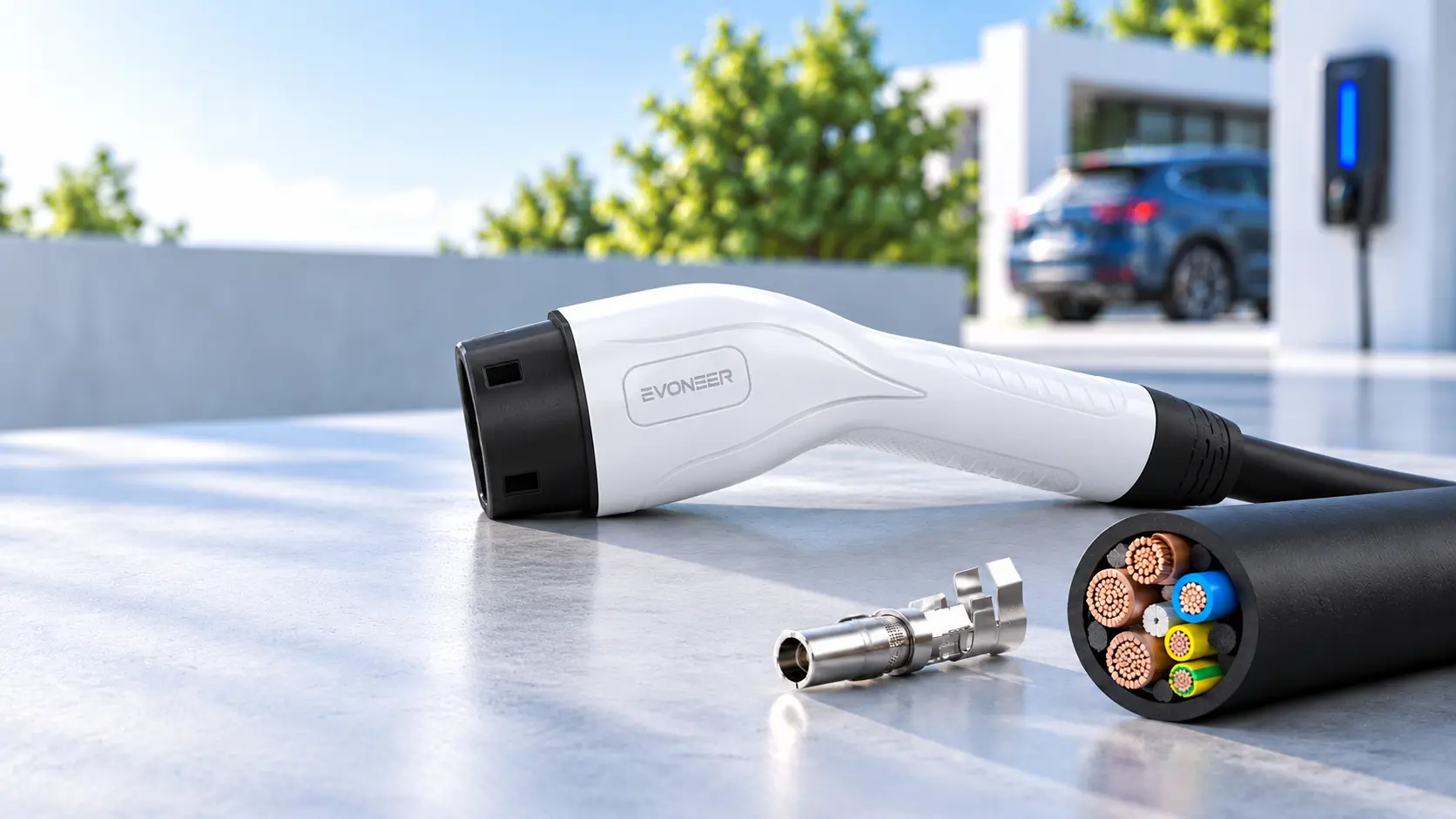
The proposed contact specification uses silver plating over conductive metal terminals. A 5 μm plating thickness is a supplier specification to verify against the final model's report.
THE THINKING BEHIND THE EQUIPMENT
The material, the connection, the protection and the evidence behind every specification all matter.
01 / ENGINEERING MINDSET
EV charging equipment is handled, connected, coiled, stored and exposed to the elements again and again. We consider the whole experience, from contact materials and cable flexibility to the way a connector feels in the hand.
Our product pages describe the proposed range. Exact ratings, test results and conformity documents are tied to a specific model and market; our team can provide the current documentation for the product you are considering.
02 / CONSTRUCTION
Our Type 2 cable specification focuses on sound electrical materials, considered handling and durability where it counts.
The proposed contact specification uses silver plating over conductive metal terminals. A 5 μm plating thickness is a supplier specification to verify against the final model's report.
Conductors are specified in copper, with insulation layers selected for the cable's electrical duty and repeated everyday handling.
A robust TPU outer sheath is specified to help resist abrasion, flexing and outdoor wear. Final material and temperature ratings belong to the model datasheet.
A sculpted grip, reinforced strain relief and a shaped connector housing support comfortable use and reduce stress at the cable entry.
Construction details describe the intended cable specification. Confirmed materials and dimensions may vary by final model.
03 / ENDURANCE
Longevity is about the whole assembly: the fit of the contacts, a housing that protects them, a cable that bends without undue strain and storage that keeps the kit organised.
Explore the Type 2 cableSupplier-stated endurance target; request the model-specific test evidence before relying on this figure.
Two practical length options for different parking and socket positions.
Intended for compatible Type 2 EVs and untethered AC charge points.
04 / REAL-WORLD CONDITIONS
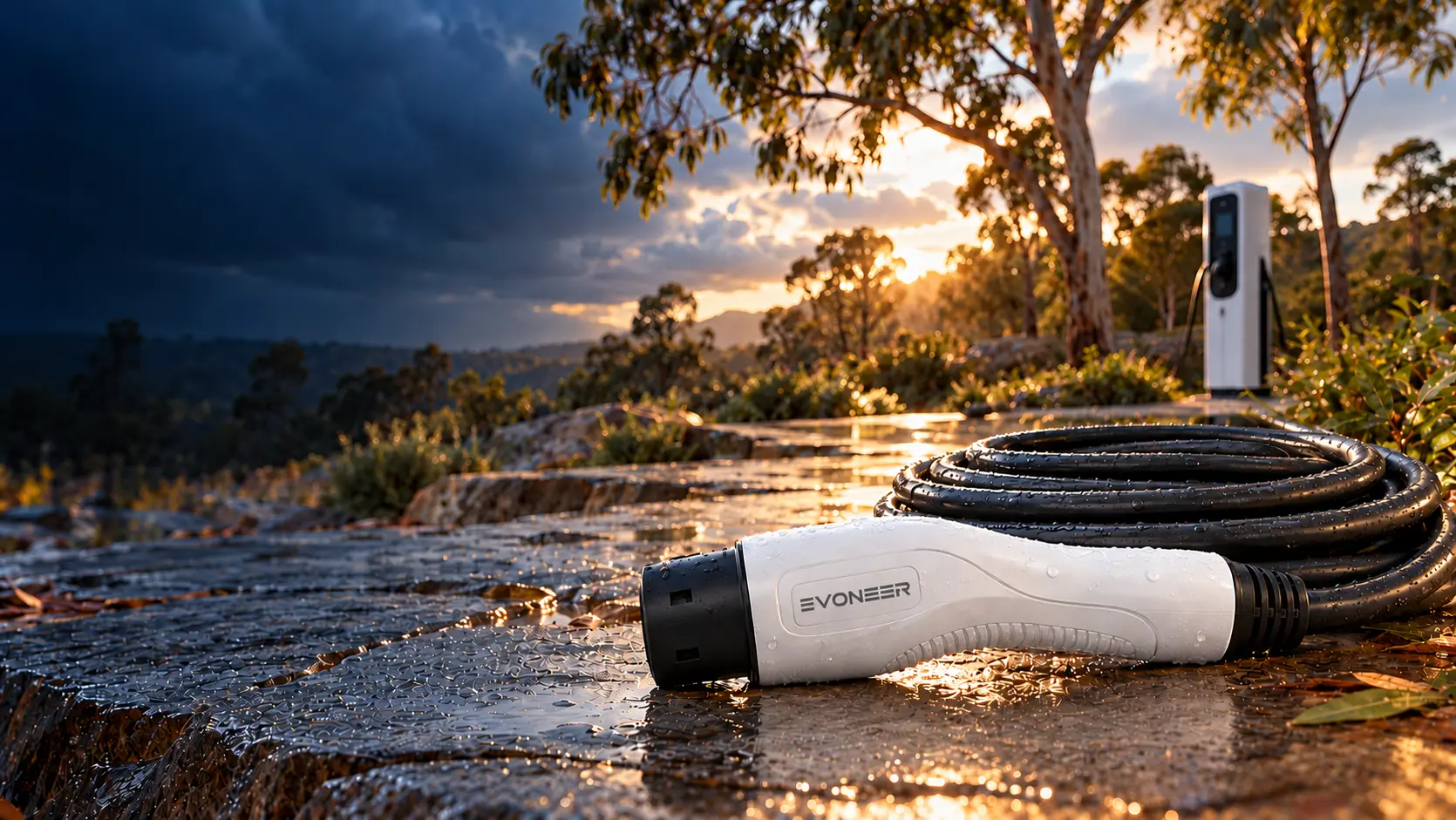
Sun, rain, road dust and cold mornings are part of an electric journey. The right materials and verified enclosure ratings help equipment meet the conditions it is designed for.
 01 / SUN & HEAT
Jacket selection and housing materials matter where a cable is handled and stored in warm, sunlit conditions.
 02 / RAIN
Ingress protection is configuration-specific. A connected connector and an unplugged connector may have different ratings.
 03 / DUST
Keep contact faces clean and dry before use, and store the cable in its bag when the journey is done.
 04 / COLD
Flexibility and operating temperature should be assessed against the exact cable construction and model datasheet.
Images illustrate environments; they are not test results. Ask for the final product's IP rating and temperature range, including the mated or unmated condition.
05 / PROTECTION
TYPE 2 CHARGING CABLE
The passive cable relies on its rated conductors, insulation, contacts and connector housing. Charging current and fault response are governed by the vehicle, charging station and electrical installation; the cable itself is not an active overvoltage or short-circuit controller.
Cable detailsPORTABLE CHARGING · IN DEVELOPMENT
For the planned portable range, the design brief includes monitoring and response for overcurrent, overvoltage, overtemperature and short-circuit faults. Final functions, ratings and approvals will be published with the released model.
Portable range06 / STANDARDS & DOCUMENTATION
Different marks, standards and declarations serve different purposes. We assess what applies to the exact product and destination market.
Relevant parts cover EV plugs, connectors and Type 2 interface dimensions. The applicable edition and test evidence depend on the connector model.
General requirements for EV supply equipment are relevant to applicable charging products, including the portable range as it develops.
Australian supply involves the responsible supplier, applicable equipment classification, evidence of compliance and Regulatory Compliance Mark obligations.
These are distinct declarations, rules or third-party assessment routes. Their relevance and status must be verified for each model and market.
A PRACTICAL DOCUMENT CHECK
NEED THE DOCUMENTS?
Send us the product code, intended market and the documents you require. We can discuss the available datasheet, declarations and test evidence for that model. A mark shown in concept imagery is not proof of an issued approval.